

5 Trauma-Informed Ways to Praise Your Child
Let’s start with something simple but powerful: our words shape how our children see themselves. Praise isn’t just about building confidence — it’s about building safety. When a child has experienced stress or trauma, even in small everyday ways, they need consistent, authentic signals that say, You are seen. You are safe. You matter.
When we offer mindful, specific praise, we’re doing more than boosting self-esteem. We’re strengthening connection, helping the nervous system relax, and showing our children what secure, loving attention feels like. Children who have experienced unpredictability learn to scan for cues — is the adult safe? Am I good? Am I loved? Your calm, genuine praise answers those questions without words.

5 Trauma-Informed Tips for Responding to Defiance
Let’s start with some compassion: defiance isn’t always what it looks like.
When a child refuses to listen, argues back, or digs in their heels, it’s easy to see it as disrespect. But underneath defiance, there’s usually a story — a nervous system trying to stay safe, a child testing whether you’ll still love them when they push, or a brain that’s flooded and can’t regulate yet.
Most of us learned parenting through what was modeled for us — and some of those strategies may have been fear-based or focused on control. But when we know better, we can do better. Trauma-informed parenting invites us to move from reactivity to regulation, from control to connection. 💛
The Science of Co-Regulation: How Your Calm Becomes Theirs
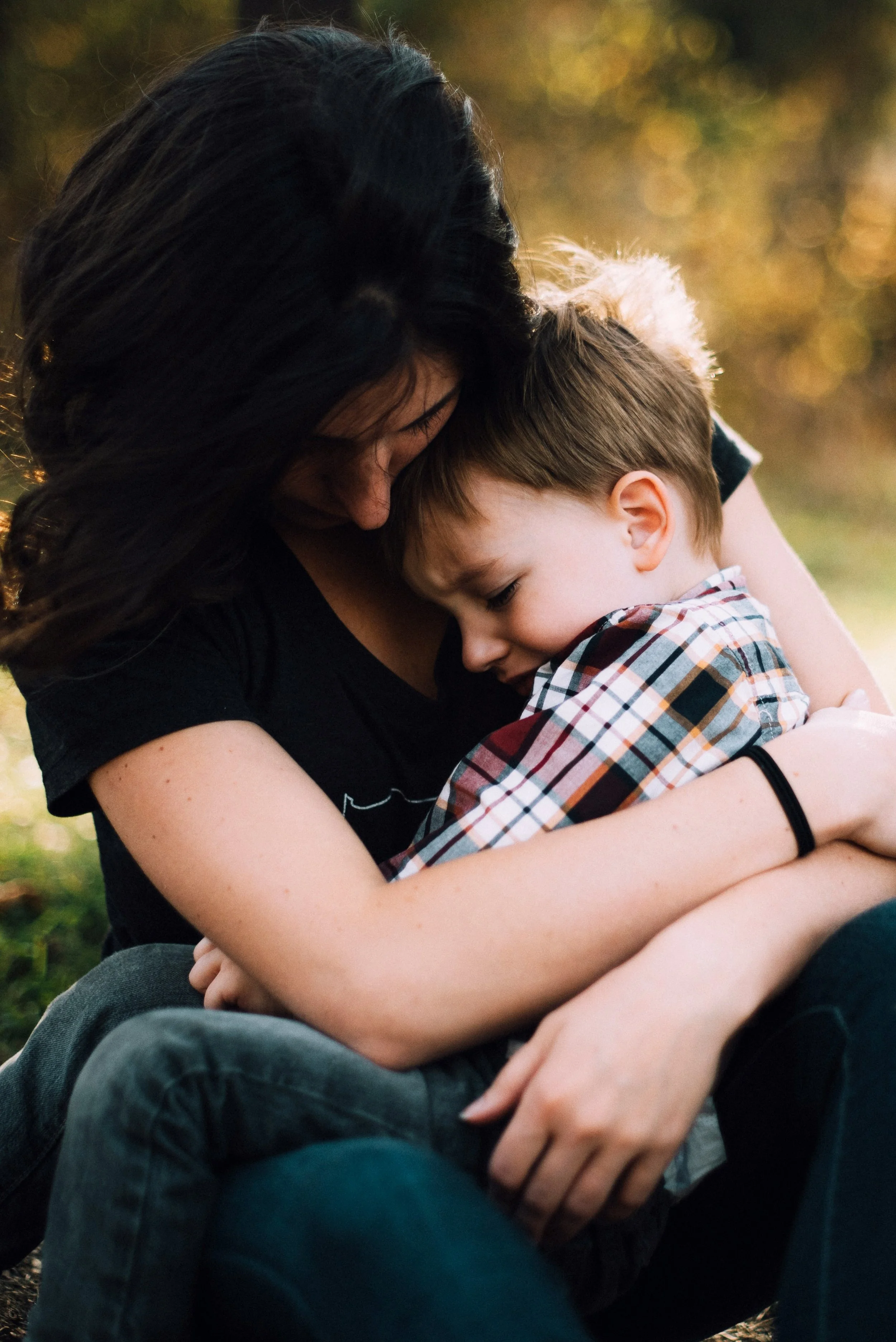
When your child is melting down in the grocery store or crying before bed, it can feel like your nervous system is melting down right alongside them. That’s not a failure, it’s biology. Our brains are wired to sync.
This process is called co-regulation, and it’s how humans learn to calm, connect, and feel safe together. From infancy to adulthood, we rely on the nervous systems of those around us to help stabilize our own.

Relaxation for Growing Minds: Simple, Science-Backed Ways to Help Kids Feel Safe and Calm
When your child feels anxious, it’s easy to assume they’re just “acting out,” but what you’re really seeing is a nervous system asking for safety. Kids experience stress just like adults do—they just don’t have the words yet to explain it. By teaching simple relaxation tools like deep breathing, movement, and guided imagery, you’re not only helping them calm down in the moment—you’re wiring their brain for resilience and emotional regulation that lasts a lifetime.
From Therapy Rooms to Content Creation: My Journey to KidLogic Labs
Hi, I’m Leanne Pilgrim—and I’ve spent over a decade walking alongside children and families as they navigate some of life’s hardest challenges. My career began in the world of mental health, where I worked as a child trauma therapist. In those years, I specialized in trauma-informed care, gaining advanced training in evidence-based approaches like Trauma-Focused Cognitive Behavioral Therapy (TF-CBT), Trauma Systems Therapy (TST), EMDR, Parent-Child Interaction Therapy (PCIT), and Child-Parent Psychotherapy (CPP).
Working with kids who had experienced abuse, loss, or overwhelming stress taught me something profound: children don’t heal through words alone. They heal through play, creativity, connection, and safe relationships.